
How to Choose a Large-Capacity NAND Flash for MCU
As we all know, the MCU (Microcontroller Unit) is a "small but powerful" microcontroller. Its applications are extremely broad, ranging from small devices like smartwatches to large systems like aerospace equipment. Currently, several major manufacturers in the market include STMicroelectronics (with the classic STM32 series), TI, NXP, Microchip, Renesas, and others.
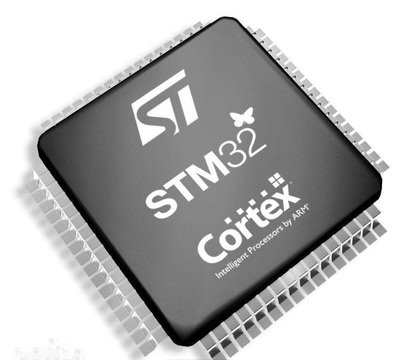
In terms of storage for MCU (Microcontroller Unit), in the past, it was sufficient to use built-in EEPROM or external NOR Flash. However, with the rise of the Internet of Things (IoT), the application of MCUs has become more widespread, and MCUs are gradually facing the need for larger storage capacities to store audio, images (GUI), video buffers, protocol stacks, and more.
Traditional EEPROM and NOR Flash are no longer adequate. At this point, MCUs may need to use NAND Flash. But using NAND Flash with an MCU introduces new challenges:
Lack of Official NAND Flash Drivers: Major MCU manufacturers like ST, TI, NXP, Microchip, and Renesas generally do not provide official drivers for NAND Flash. Even if there are drivers for some series, many of the NAND Flash models in the support list are already discontinued.
Writing Custom Drivers: Writing custom drivers for NAND Flash brings several headaches:
Bad Block Management: NAND Flash requires bad block management, as well as operations like EDC/ECC.
Compatibility Issues: Different brands of NAND Flash have varying parameters like internal block size, page size, timing, and so on, requiring adjustments to the drivers.
Power-Performance Trade-off: While the theoretical functionality might be achieved, everyone knows that MCUs are designed for low power consumption, which involves performance compromises. Handling such complex drivers can overwhelm the MCU, making it feel like “a small horse pulling a heavy cart.”
So, is there a simple, easy-to-use, stable, and reliable NAND Flash product for MCUs that need large-capacity storage? The answer is yes. Let us proudly introduce SD NAND, also known as SMD T-Card, SMD TF Card, SMD SD Card, SMD Memory Card, SMD Flash Card, SMD Card, SMD USB Flash Drive, SMD UDP, and others.
SD NAND Architecture:
In simple terms, SD NAND uses the most durable and stable NAND Flash (SLC NAND Flash) wafers, with an erase-write cycle life of up to 100,000 cycles. It has an integrated Flash controller and firmware for NAND Flash management. Externally, it uses the most universally compatible SD interface (which is supported by almost all MCUs).
SD NAND comes in a WSON-8 package, with a compact size of 6x8mm. The small size and fewer pins not only save PCB space but also make soldering easier. Most MCU development boards are not very complex (many are two-layer boards), and this packaging allows the product’s PCB to remain simple and compact.
The available capacities for SD NAND are 128MB and 512MB, with plans to release 1GB and 4GB versions in the future. Customers can select the appropriate capacity based on their needs, which helps optimize costs.
SD NAND also includes bad block management, average read/write algorithms, and dynamic and static EDC/ECC management algorithms. This ensures stable product quality and helps extend product lifespan. The built-in Flash management algorithms allow the MCU to focus on other tasks, without the need to worry about NAND Flash management.
Conclusion:
After using SD NAND, the MCU can run smoothly and efficiently. The complex task of NAND Flash management is handled by SD NAND, making it the perfect choice for MCUs in need of large-capacity storage.
